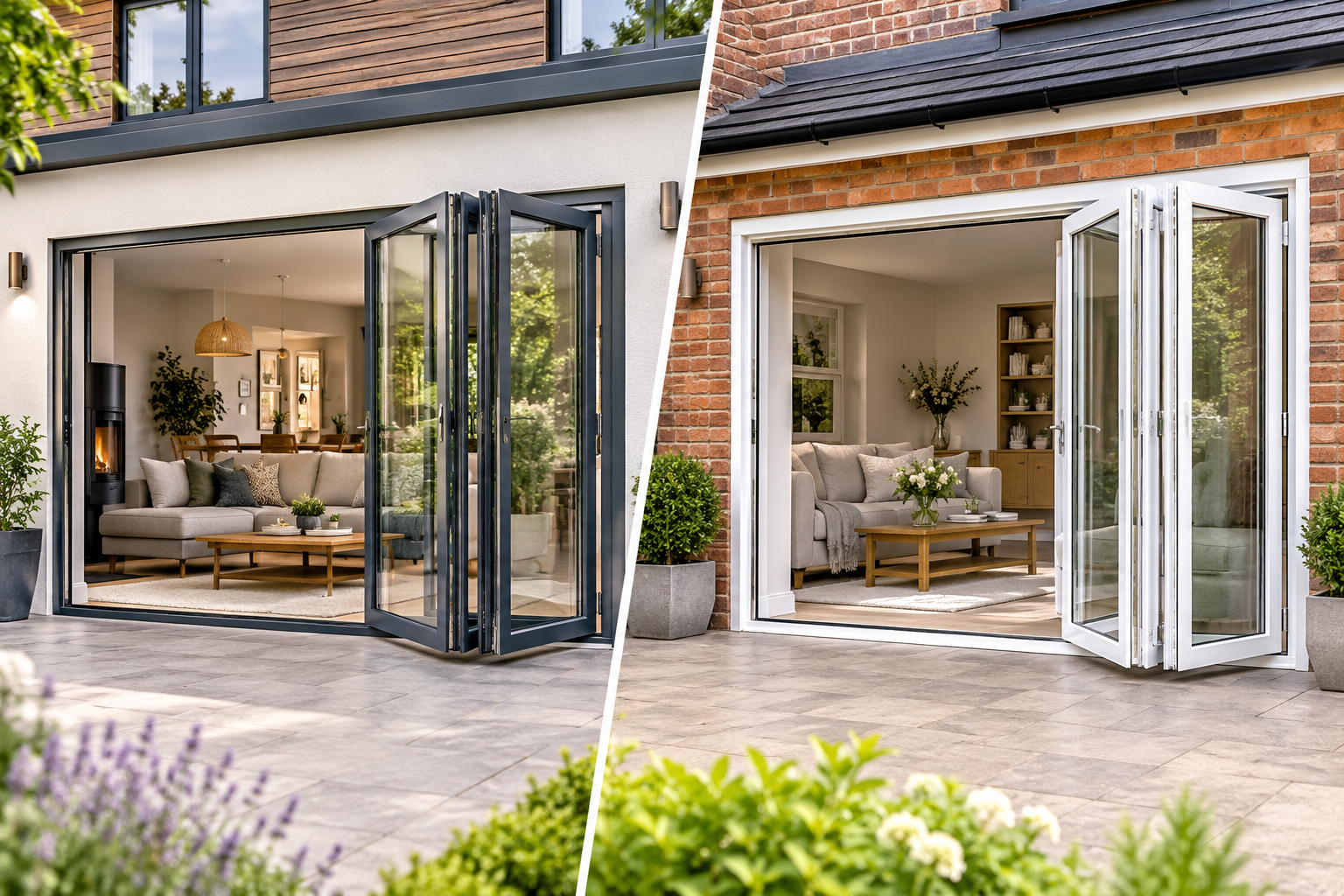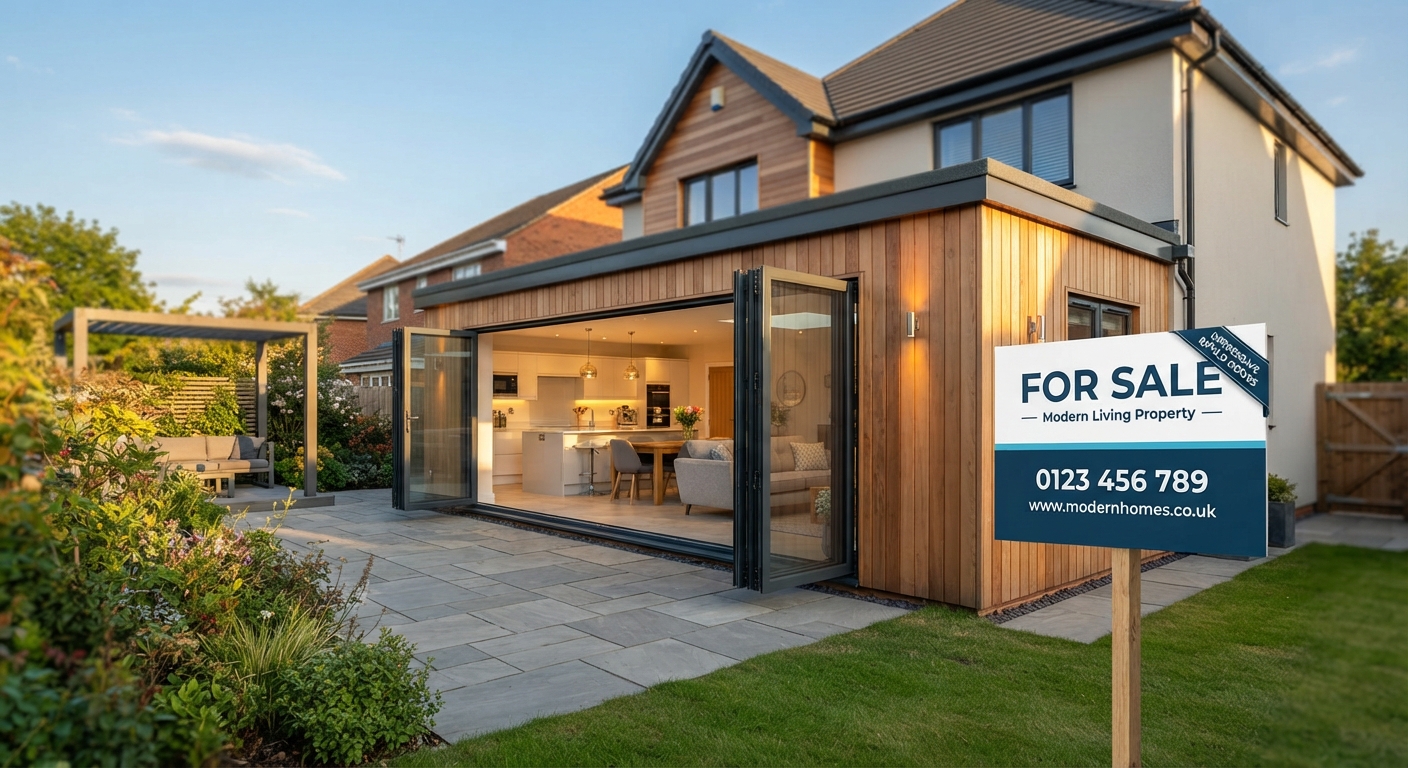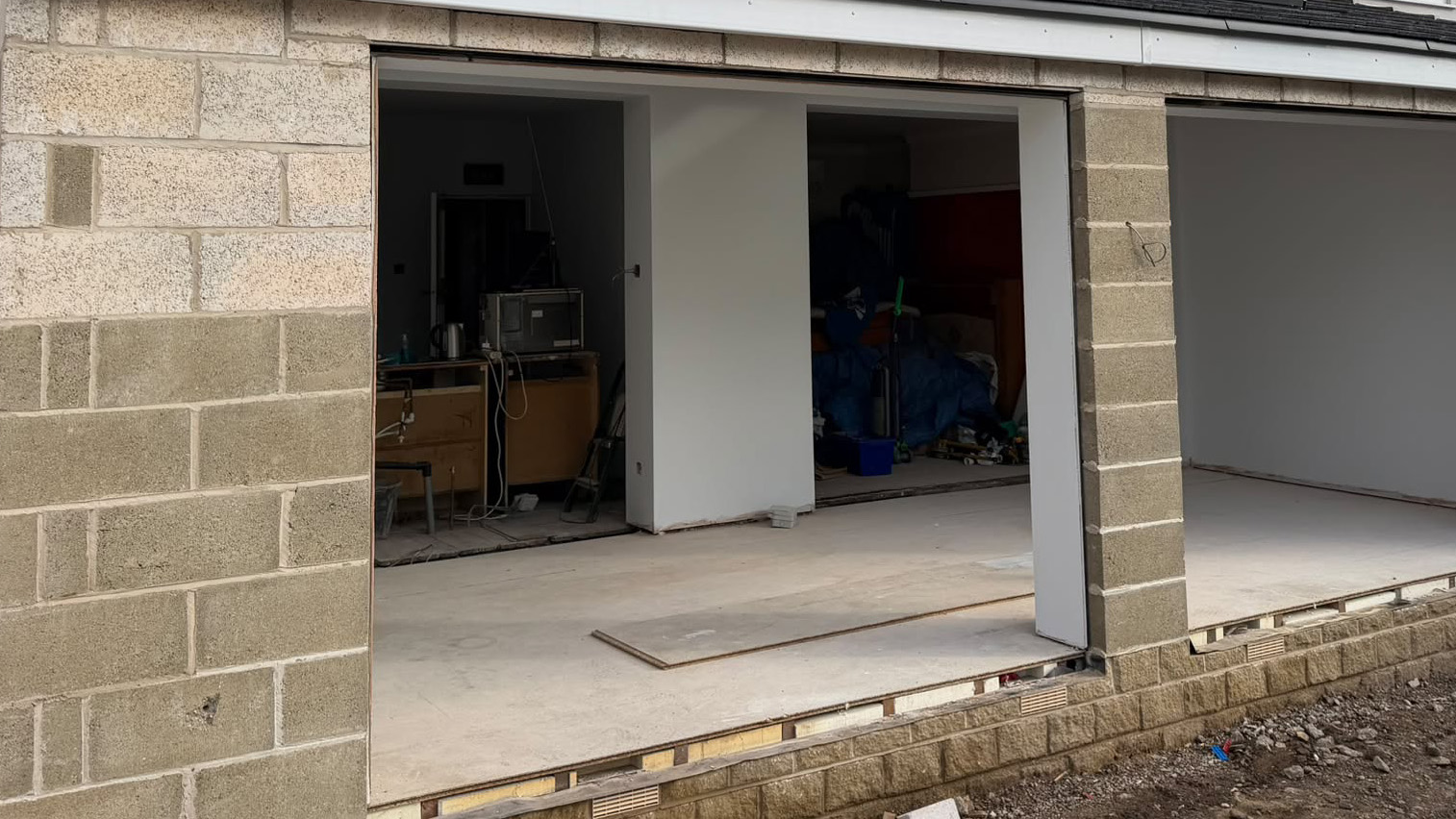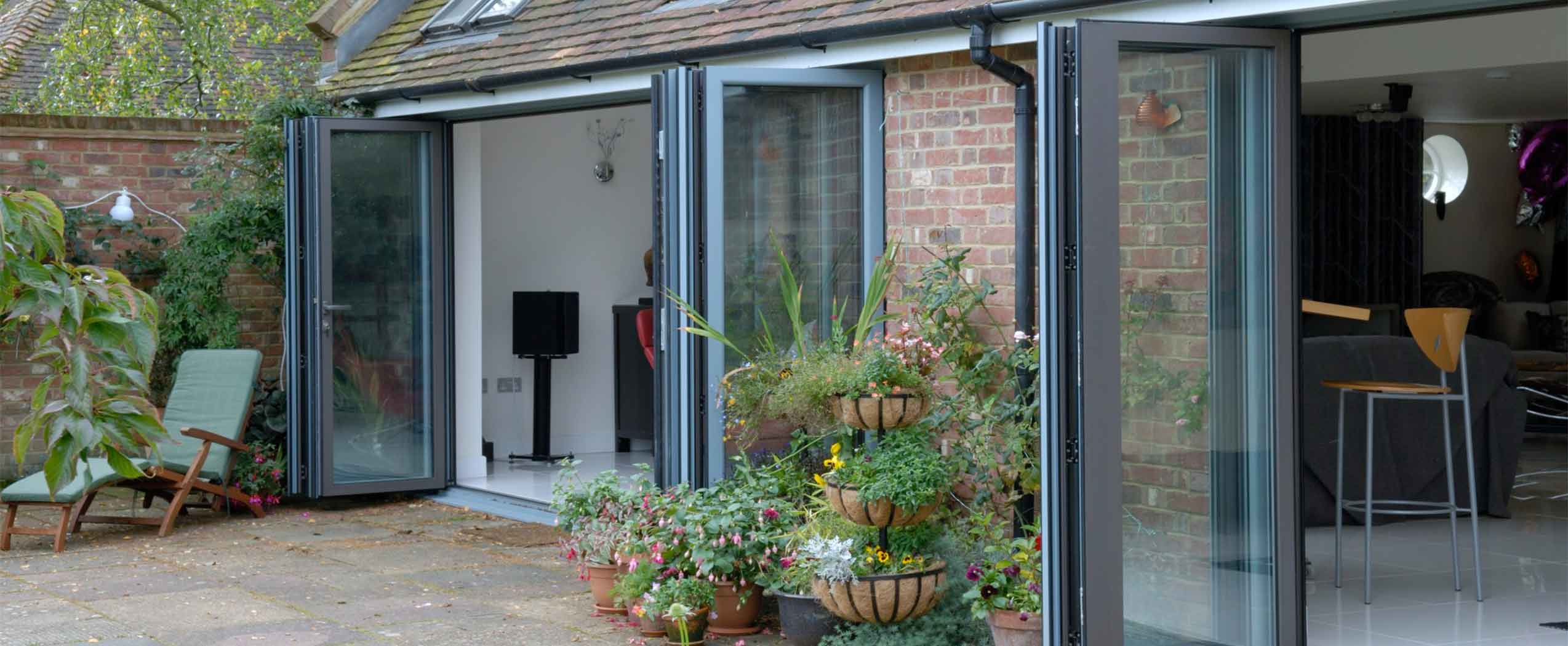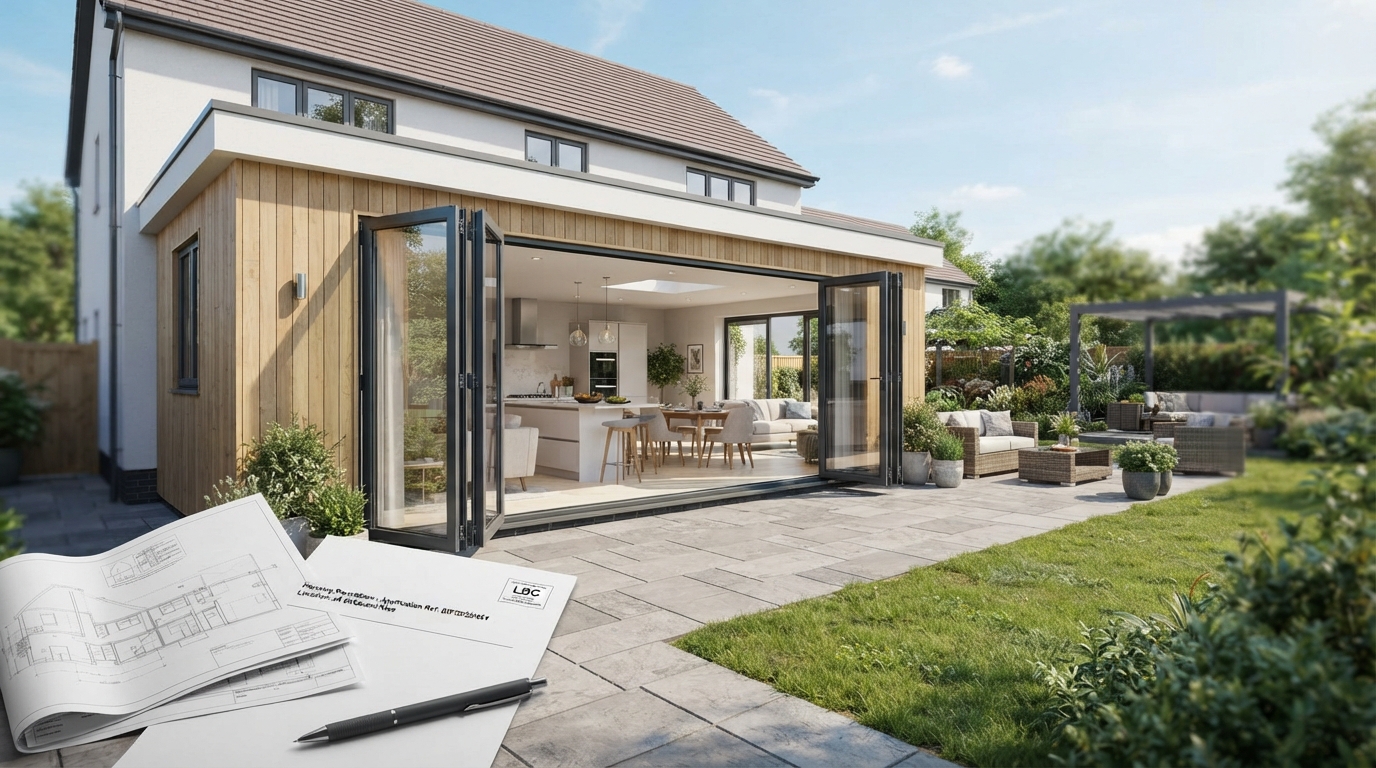
Bifold doors have become a popular feature of modern UK homes, providing a practical way to connect indoor living spaces with gardens, patios and outdoor entertaining areas.
Whether you are replacing existing patio doors, converting a window into a set of bifold doors or creating a completely new opening in an external wall, there are several things to consider before starting work.
One of the most common questions homeowners ask is whether planning permission is required to install bifold doors.
The good news is that planning permission is not usually required for straightforward replacement door installations. However, the rules can vary depending on the property, its location and the extent of the proposed alterations.
In this guide, we explain when planning permission may be required, what exceptions homeowners should be aware of and which other regulations need to be considered before installing bifold doors.
Do You Need Planning Permission for Bifold Doors?
In many cases, homeowners can install bifold doors without applying for planning permission.
For example, replacing existing external patio doors with new bifold doors may not require planning permission, particularly where the replacement is similar in appearance and does not significantly alter the external appearance of the property.
In England, permitted development rights allow certain improvements and alterations to houses to be carried out without a formal planning application, provided the relevant conditions and restrictions are met.
The Planning Portal confirms that the insertion of new doors and windows of a similar appearance to those used in the construction of the house will not usually require planning permission.
However, this does not mean every bifold door installation is automatically exempt.
If the proposed work involves significantly changing the appearance of the property, creating a substantially different opening or making structural alterations, further checks may be necessary.
When Can You Install Bifold Doors Without Planning Permission?
There are several common situations where planning permission may not be required.
1. Replacing Existing Patio Doors
One of the simplest ways to introduce bifold doors is to replace an existing set of patio doors.
If the existing opening is suitable and the replacement doors are similar in overall appearance, planning permission will not normally be necessary for an ordinary house.
For example, replacing older patio doors with modern aluminium bifold doors may be possible without a planning application, depending on the circumstances.
Homeowners should still check whether permitted development rights have been restricted for their property.
2. Replacing French Doors with Bifold Doors
Replacing traditional French doors with bifold doors is another popular home improvement project.
The existing opening can often accommodate a new bifold door system without requiring significant building work.
However, differences in frame arrangement, glazing and external appearance can affect whether the proposed installation falls within permitted development rules.
It is sensible to check with the local planning authority before ordering the doors if the proposed design represents a noticeable change.
3. Installing Bifold Doors in a Kitchen Extension
Many homeowners choose bifold doors when building a new kitchen extension.
In some circumstances, an extension can be constructed under permitted development rights without a formal planning application.
However, the extension must satisfy the relevant conditions covering matters such as dimensions, height, position and materials.
If the extension requires planning permission, the proposed bifold doors will normally be considered as part of the overall design.
When Might Planning Permission Be Required?
Although many installations are straightforward, there are circumstances where planning permission or additional consent may be necessary.
1. Creating a Completely New Door Opening
If you want to remove part of an external wall and create a new opening for bifold doors, you should check the planning implications before work begins.
The extent of the alteration, its location and the effect on the property’s external appearance will all be relevant.
Some alterations to houses may fall within permitted development rights, but others may require a planning application.
This is particularly important when creating large glazed openings where the original design of the building will be noticeably changed.
2. Installing Bifold Doors at the Front of Your Property
Homeowners considering bifold doors at the front of their property should take particular care.
Changes to prominent elevations, especially those facing a public road, can have a greater impact on the appearance of a building.
Although some alterations may still be permitted, homeowners should not assume that the same rules apply to every elevation.
Contacting the local planning authority before proceeding can help establish whether permission is required.
3. Properties in Conservation Areas
Conservation areas are designated to protect places with special architectural or historic interest.
If your home is situated within a conservation area, additional planning restrictions may apply.
These restrictions can affect changes to external doors, windows and other architectural features.
An Article 4 Direction may also remove certain permitted development rights, meaning work that would normally be allowed could require planning permission.
Before installing bifold doors, homeowners should check with their local authority to establish whether any additional restrictions apply.
4. Listed Buildings
If your property is listed, additional rules apply.
Listed Building Consent may be required for alterations that affect the building’s special architectural or historic character.
This can include replacing existing doors, changing window openings or installing modern aluminium bifold door systems.
Even relatively small alterations can require consent depending on the building and the nature of the work.
Homeowners should speak to their local planning authority before making changes to a listed property.
Carrying out unauthorised works to a listed building can have serious legal consequences.
5. Flats and Leasehold Properties
The planning rules for flats and maisonettes can differ from those applying to individual houses.
In addition, leasehold homeowners may need permission from their freeholder, landlord or property management company before changing external doors.
This is particularly relevant where alterations affect the external appearance of a building or shared structural elements.
Always check the terms of your lease and obtain any necessary approvals before arranging installation.
Do Bifold Doors Need Building Regulations Approval?
Planning permission and Building Regulations are two separate matters.
Even if planning permission is not required, the installation may still need to comply with Building Regulations.
External doors are controlled fittings, meaning requirements apply to areas such as thermal performance, safety glazing, ventilation, access and fire safety where relevant.
For example, replacement bifold doors must meet applicable energy-efficiency requirements.
Safety glazing may also be necessary in locations where people could accidentally collide with the glass.
If installing bifold doors involves removing part of a load-bearing external wall, suitable structural support will be required.
This may involve installing a steel beam or lintel, supported by appropriate structural calculations.
Homeowners should discuss the project with their installer and building control department to establish what approvals and certification are necessary.
What About Planning Permission in Scotland and Wales?
Although the general principles are similar across the UK, planning rules are not identical in every nation.
England
In England, permitted development rights allow certain alterations to houses without requiring a planning application.
The Planning Portal advises that new or replacement doors of a similar appearance will not usually need planning permission.
However, listed buildings, conservation areas and properties affected by Article 4 Directions may be subject to additional restrictions.
Wales
Welsh Government guidance states that planning permission is not normally required for repairing, fitting or replacing doors and windows.
However, listed buildings and properties in conservation areas may be subject to additional requirements.
Scotland
Scotland has its own permitted development rules.
Some alterations to houses can be completed without planning permission, but restrictions apply depending on the type of property, its location and the proposed work.
Additional consent may be required for listed buildings and properties in conservation areas.
Northern Ireland
Northern Ireland operates a separate planning system through its local planning authorities.
Homeowners should contact their local council’s planning department to establish whether a proposed bifold door installation requires permission or falls within permitted development rights.
The important point is not to assume that rules applying in England automatically apply throughout the UK.
How to Check Whether You Need Planning Permission
If you are unsure whether your proposed bifold door installation requires permission, there are several steps you can take.
**Contact your
Check your property status. Establish whether your home is listed, located within a conservation area or subject to any special planning restrictions.
Understand the proposed work. Consider whether you are replacing existing doors, changing a window into a door or creating a completely new opening.